
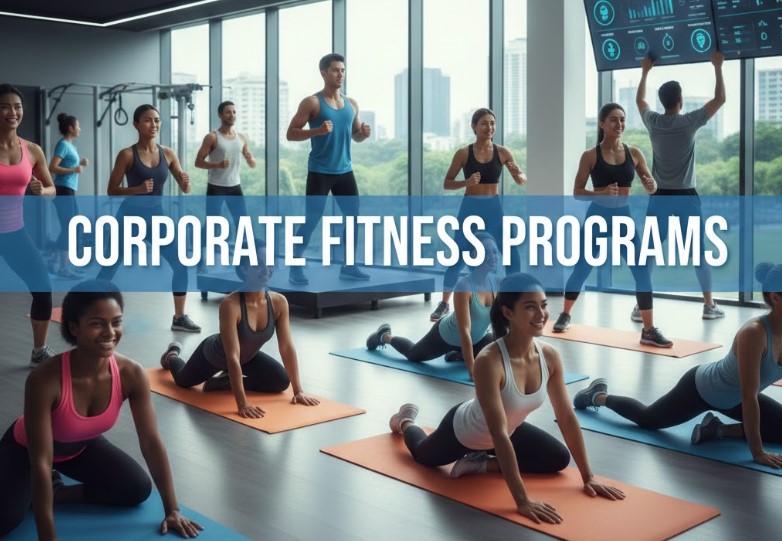
Corporate Fitness Programs are fast becoming the fundamental pillar of modern business strategy, moving far beyond simple perks to become a necessity for fostering a high-performing, resilient, and motivated workforce.
Recognizing that the health and well-being of employees directly correlate with organizational success, leading companies are strategically investing in these initiatives to drive down healthcare costs, reduce absenteeism, and significantly boost productivity.
These programs are designed to address the challenges of today’s demanding work environment by providing employees with accessible and engaging pathways to physical activity, stress reduction, and preventative health, ultimately translating into a more energized and focused team ready to tackle complex business challenges.
The true value of comprehensive Corporate Fitness Programs lies in their undeniable return on investment (ROI), both financially and culturally.
By proactively promoting fitness and mental health, organizations create a supportive environment that enhances job satisfaction, morale, and long-term employee retention.
When employees feel valued and supported in their personal health journeys, their loyalty and dedication to the company increase dramatically.
This strategic investment signals a commitment to cultivating a culture where well-being is prioritized, making the company more attractive to top talent and ensuring sustained competitive advantage in the marketplace.
Understanding The Irrefutable ROI of Corporate Fitness Programs
The most compelling argument for implementing robust Corporate Fitness Programs lies in their undeniable return on investment (ROI). It’s a strategic expenditure that directly impacts several key financial metrics, turning the cost center of employee healthcare and turnover into a profit driver.
Corporate Fitness Programs are a proactive measure that mitigates the soaring costs associated with chronic disease, stress-related absences, and poor employee morale. When employees are physically fit, they are less likely to suffer from illnesses, leading to a significant reduction in sick days.
Data consistently shows that companies with thriving wellness initiatives experience a drop in absenteeism, often measured in percentage points that translate to millions in recovered productivity across large organizations.
Moreover, healthy employees require less medical intervention, leading to lower premiums or fewer claims for employer-sponsored health insurance. This direct financial benefit, however, is only the tip of the iceberg.
Reduced Healthcare Costs and Lower Insurance Premiums
One of the most tangible and immediate financial returns of Corporate Fitness Programs is the reduction in employee healthcare expenses.
Physically active employees tend to have a lower incidence of chronic conditions like type 2 diabetes, heart disease, and hypertension, which are major drivers of high medical costs. By promoting preventative health, companies can see a decline in the frequency and severity of medical claims.
Over time, insurers recognize a healthier workforce, which can directly lead to lower group health insurance premiums, providing a direct, measurable financial saving that offsets the cost of the wellness program itself.
Decreased Absenteeism and Presenteeism
Corporate Fitness Programs significantly combat the loss of productivity caused by both absenteeism (employees calling in sick) and presenteeism (employees being at work but too unwell or unfocused to be productive).
Healthy employees are less susceptible to common illnesses, reducing the number of sick days taken. Furthermore, regular physical activity is a potent stress reducer and mood elevator, improving mental health and focus.
This improved well-being ensures that when employees are at work, they are fully engaged and operating at their peak efficiency, maximizing the labor hours purchased by the company.
Enhanced Employee Productivity and Cognitive Function
A fit employee is a more productive employee. Regular exercise increases oxygen and blood flow to the brain, which enhances cognitive functions such as memory, problem-solving abilities, and concentration.
Employees who participate in fitness programs often report higher energy levels throughout the workday and suffer less from the afternoon slumps that plague sedentary workers.
By integrating exercise, companies are essentially boosting the mental horsepower of their workforce, leading to faster completion of tasks and fewer errors.
Improved Talent Attraction and Retention
In today’s competitive job market, a robust Corporate Fitness Program serves as a powerful non-monetary benefit that differentiates a company as an “employer of choice.”
Prospective employees, particularly younger generations, increasingly prioritize well-being and work-life balance when evaluating job offers.
For existing employees, these programs signal that the company values them as individuals, fostering strong loyalty and job satisfaction. This dramatically lowers employee turnover rates, saving the substantial costs associated with recruitment, training, and lost institutional knowledge.
Strengthened Workplace Morale and Team Cohesion
Fitness initiatives often incorporate team challenges, group classes, or company-sponsored sports leagues, which are excellent tools for informal team building.
Participating in a shared, healthy activity breaks down departmental silos and fosters a sense of camaraderie and shared accomplishment.
This positive social interaction improves workplace morale, leads to better communication, and creates a more supportive and collaborative work environment, which is indirectly linked to better overall business performance.
Designing a Winning Corporate Fitness Program
A successful Corporate Fitness Program is not a generic, off-the-shelf solution but a carefully engineered initiative that integrates seamlessly into the company culture and addresses the diverse needs of the workforce.
Moving beyond simply offering a gym discount, a winning program is holistic, accessible, and strategically promoted to ensure high participation and maximum impact.
Conducting a Comprehensive Needs Assessment and Baseline Measurement
The foundational step in designing an effective Corporate Fitness Program is understanding the current state of the employee population.
This involves conducting a comprehensive, confidential needs assessment through employee surveys, health risk appraisals (HRAs), and analysis of anonymized health claims data.
The surveys should gauge employee interest in various activities (e.g., yoga, cycling, stress management), preferred times for participation (lunchtime, before/after work), and current perceived barriers to fitness (e.g., time, cost, motivation).
Establishing this baseline data; including metrics like average health risks, stress levels, and current participation in existing perks, is of high importance.
This ensures the resulting program is not based on assumptions but is directly tailored to the workforce’s actual needs, guaranteeing relevance and maximizing engagement from the outset.
Prioritizing Accessibility and Eliminating Barriers to Participation
The greatest challenge for any Corporate Fitness Program is the barrier of convenience. A winning design must actively remove obstacles related to time, location, and cost.
This means strategically offering a mix of on-site, hybrid, and virtual options. On-site facilities, even simple exercise rooms or dedicated stretch areas, drastically reduce travel time.
For hybrid or remote teams, a robust virtual library of on-demand classes (accessible 24/7) and live virtual sessions ensures inclusivity regardless of geography or schedule. Furthermore, programs should accommodate varying physical capabilities and fitness levels.
By providing options ranging from beginner desk stretches and chair yoga to advanced HIIT classes and marathon training groups, the program ensures that every single employee feels invited and able to participate, reinforcing that the program is truly for everyone.
Fostering a Culture of Leadership Buy-In and Modeling
A Corporate Fitness Program cannot thrive if it is delegated solely to the Human Resources department; it requires visible and enthusiastic support from the highest levels of the organization.
When senior executives and managers actively participate in the wellness initiatives, whether by joining a lunchtime walking club, visibly utilizing the on-site gym, or advocating for mental health days, it sends a powerful, non-verbal message to the entire workforce.
This leadership modeling provides employees with the vital “permission” to step away from their desks for a physical activity break without fear of being perceived as less committed.
This top-down endorsement is essential for integrating the program into the company’s core values, transforming it from a mere offering into a fundamental aspect of the corporate culture.
Integrating Holistic Wellness Beyond Physical Exercise
While the name suggests a focus on fitness, a successful Corporate Fitness Program must embrace a holistic view of employee well-being, recognizing the interconnectedness of physical, mental, and nutritional health.
This expansion includes offering comprehensive stress management resources, such as guided meditation and mindfulness workshops, to combat burnout and improve focus.
Nutritional guidance, like healthy eating seminars, subsidized healthy cafeteria options, and workshops with registered dietitians, should complement physical activity.
By addressing the ‘whole person,’ the program ensures that employees are not just physically fit but are also mentally resilient and well-fueled, maximizing their potential both inside and outside the workplace.
Leveraging Technology for Engagement, Tracking, and Gamification
Modern Corporate Fitness Programs rely heavily on technology to maximize reach and drive sustained participation. This involves utilizing dedicated wellness platforms, mobile apps, and wearable technology (often with company subsidies) to track progress, access resources, and foster friendly competition.
Gamification; using points, badges, leaderboards, and team-based challenges, introduces a fun, competitive, and social element that boosts engagement far beyond individual motivation.
The technology must ensure data privacy and allow employees to control their health information while providing the program administrator with high-level, aggregate data for performance evaluation and program refinement.
Establishing Robust Communication and Promotional Strategies
The best-designed Corporate Fitness Program will fail if employees are unaware of its existence or its benefits. A winning strategy demands a continuous, multi-channel communication plan.
Information about classes, challenges, and new resources must be promoted through multiple platforms; internal newsletters, company intranets, digital signage, email campaigns, and dedicated program portals.
The messaging should focus not only on the mechanics of the program but also on the personal benefits to the employee, using testimonials and success stories to inspire participation.
Furthermore, timing is critical; launching campaigns tied to key events, like the New Year, seasonal changes, or major company events, can generate excitement and fresh interest.
Implementing Continuous Evaluation and Adaptation
A truly winning Corporate Fitness Program is never static; it is built on a foundation of continuous feedback and adaptation. Program effectiveness must be regularly measured against the initial baseline metrics and objectives, using key performance indicators (KPIs) such as participation rates, employee satisfaction scores, health risk assessment trends, and feedback surveys.
This data-driven approach allows the program managers to identify which elements are succeeding, which are falling short, and where new resources are needed.
Regular, iterative adjustments; such as swapping out an unpopular class for a new offering or changing the timing of a key workshop, ensure the program remains relevant, valuable, and responsive to the evolving needs of the workforce.
Measuring Success and Future-Proofing Your Corporate Fitness Program
Designing and launching a robust Corporate Fitness Program is only half the battle; to secure its longevity and continued financial backing, a meticulous process for measuring its impact and a clear strategy for future-proofing its relevance are essential.
Success is measured not just in dollars saved, but in the sustained vitality and engagement of the workforce.
Quantitative Metrics: Demonstrating the Financial ROI
Measuring success begins with clear, objective data that substantiates the financial return on investment (ROI) of the Corporate Fitness Program.
Reduction in Absenteeism and Sick Leave Usage
The most direct quantitative measure is tracking changes in sick leave utilization and overall absenteeism rates among program participants versus non-participants, where possible. Success is demonstrated by a measurable decrease in lost workdays and short-term disability claims.
Furthermore, tracking improvements in productivity metrics, such as reduced time spent on tasks or fewer quality control issues, can indirectly link program participation to better on-the-job performance.
Calculating the dollar value of these recovered work hours provides concrete evidence to senior leadership that the program is a profit enabler, not just a cost center.
Healthcare Cost Trend Analysis (Anonymized)
The core long-term financial proof for any Corporate Fitness Program is a favorable trend in healthcare expenditures. This involves rigorously tracking the aggregate cost of medical claims, prescription drug utilization, and emergency room visits across the employee population.
Success is defined by observing a flatter or declining curve in healthcare costs relative to industry benchmarks or to the company’s own historical data prior to the program’s implementation.
It is crucial that this analysis remains anonymous and aggregate, protecting employee privacy while providing powerful statistical evidence that the program is effectively mitigating high-cost chronic diseases.
Program Utilization and Participation Rates
Tracking the enrollment and active usage of various program components; gym subsidies, class attendance, virtual platform logins, challenge completion rates, provides critical data on engagement. High utilization rates validate the program’s design and accessibility.
Low participation in a specific activity (e.g., a specific weekly class) signals a need for immediate intervention, such as changing the time, the instructor, or the offering itself. This metric is a real-time health check on the program’s relevance to the employees.
Qualitative Metrics: Assessing Impact on Culture and Morale
While financial metrics are vital for the C-suite, qualitative data is essential for understanding the program’s impact on employee experience and company culture.
Employee Satisfaction and Wellness Surveys
Regularly administering surveys specifically focused on wellness provides direct insight into employee perceptions. Key questions should gauge job satisfaction, perceived work-life balance, self-reported stress levels, and the perceived value of the Corporate Fitness Program.
Success is indicated by rising scores in metrics like “My company supports my well-being” and lower scores for self-reported burnout. Testimonials and open-ended feedback are invaluable for capturing success stories and identifying pain points that quantitative data might miss.
Retention and Recruitment Data Correlation
A qualitative measure of success is observing a correlation between the existence of a high-quality wellness program and improvements in talent metrics.
Analyzing exit interview data to see if a lack of wellness support is cited as a reason for departure, or tracking how often the Corporate Fitness Program is mentioned as a positive factor by new hires, demonstrates its competitive advantage.
The program becomes a key tool in the employer branding strategy, attracting candidates who value a healthy, supportive work environment.
Future-Proofing Your Program: Adaptation and Innovation
To maintain long-term success, a Corporate Fitness Program must be designed to evolve and anticipate future workforce trends.
Integration with Mental and Financial Wellness
The future of Corporate Fitness Programs involves dissolving the silo around physical activity. Programs must integrate seamlessly with robust mental health resources (e.g., EAPs, resilience training, stress coaching) and, increasingly, financial wellness programs.
Recognizing that financial stress is a major contributor to poor mental and physical health, a future-proof program will offer workshops on budgeting and debt management.
This holistic approach ensures the program addresses the root causes of employee stress and enables true well-being across all aspects of life.
Personalization and Adaptive Learning
Moving forward, generic offerings will be replaced by highly personalized experiences powered by technology.
Future Corporate Fitness Programs will leverage AI and adaptive learning platforms to recommend specific activities, nutritional plans, and mental health resources based on individual employee data (voluntarily provided).
For example, an employee with high stress assessment scores might automatically receive recommendations for meditation sessions, whereas one showing sedentary habits might be prompted to join a step challenge. This customization ensures relevance and keeps the program engaging for years to come.
Sustainability and Community Involvement
Future-proofing also means aligning the program with broader corporate social responsibility (CSR) goals.
Organizing company-sponsored participation in local charity runs, environmental clean-up walks, or linking fitness goals to donations demonstrates that the Corporate Fitness Program is about more than just individual health, it’s about community contribution.
This linkage boosts external perception, reinforces employee pride, and taps into a higher level of motivation that extends beyond self-interest.
Maintaining ethical, data-secure practices is also crucial to ensuring the program’s long-term sustainability and trust among employees.
The Activity Trends Redefining Corporate Fitness Programs
The landscape of Corporate Fitness Programs is rapidly evolving, shifting from simple gym subsidies to sophisticated, high-tech, and holistic wellness ecosystems.
The latest activity trends reflect a greater focus on personalized experiences, mental well-being, and flexibility, driven largely by the shift towards hybrid and remote work models. A winning corporate program embraces these trends to ensure maximum relevance and participation across a diverse workforce.
The Dominance of Technology Integration and Wearables
Technology is no longer a peripheral tool but the central nervous system of modern Corporate Fitness Programs.
The integration of wearable technology (smartwatches, fitness trackers, and rings) is paramount, consistently ranking as a top global fitness trend. These devices provide employees with real-time, personalized data on steps, heart rate, sleep quality, and stress levels.
For the employer, anonymized, aggregated data offers invaluable insights into the population’s health status and program engagement.
A successful program leverages this technology for gamification, using apps and platforms to host step challenges, sleep competitions, or workout streak incentives, which foster friendly competition and accountability within teams, regardless of location.
Furthermore, the rise of AI-powered personal training and data-driven coaching allows the program to deliver hyper-personalized workout and nutrition plans, moving past the one-size-fits-all approach and adapting dynamically to an individual’s progress and needs.
The Rise of Hybrid and On-Demand Fitness Models
In an era defined by flexible work, accessibility is king, driving the demand for hybrid solutions in Corporate Fitness Programs.
The core of this trend is the combination of in-person community and virtual convenience. On-demand mobile exercise apps and extensive digital content libraries allow remote or traveling employees to access high-quality, professional-led yoga, HIIT, or strength classes anytime, anywhere.
Simultaneously, in-office employees benefit from the return of small-group training (SGT) and boutique fitness experiences, such as on-site barre, specialized cycling, or functional fitness classes.
This hybrid model ensures inclusivity, addressing the needs of those who crave the social energy of a group class as well as those who require the flexibility of a solo, at-home workout.
This also includes the development of micro-breaks, such as short guided desk stretches or power naps, that fit into the tight constraints of a workday.
Holistic Wellness: Mental Health and Recovery First
Modern Corporate Fitness Programs have fundamentally broadened their scope, recognizing that physical strength is inseparable from mental and emotional resilience.
The most significant shift is the explicit focus on Exercise for Mental Health. Activities that blend movement with mindfulness, such as Yoga, Pilates, and guided meditation, are experiencing massive growth. These sessions are often offered virtually to encourage easy, private access.
Beyond traditional exercise, successful programs now incorporate recovery and rest protocols. This includes designated mindfulness and recovery zones in the office space with massage chairs or quiet areas, as well as educational resources on sleep hygiene and digital detox challenges.
This trend acknowledges the increasing prevalence of burnout and stress in the workforce, positioning the fitness program as a primary tool for mental and emotional self-care, not just physical conditioning.
Functional Training and Time-Efficient Workouts
Employees are seeking activities that directly improve their quality of life and fit into their time-crunched schedules, making efficiency a key driver in Corporate Fitness Programs.
Functional Fitness Training is highly popular because it focuses on exercises that mimic real-life movements, improving strength, balance, and coordination needed for daily tasks—reducing the risk of common workplace injuries.
Similarly, High-Intensity Interval Training (HIIT) remains a staple due to its time-efficient structure, delivering maximum cardiovascular benefit and calorie burn in short, intense bursts (often under 30 minutes).
These modalities appeal directly to busy professionals who need to maximize the impact of a limited workout window.
Furthermore, Traditional Strength Training is making a comeback, with employers recognizing its crucial role in improving bone density, boosting metabolism, and sustaining long-term functional health, moving past the fleeting popularity of quick-fix cardio.
Group Challenges and Community Building
Even with the rise of remote technology, the need for social connection and team bonding through Corporate Fitness Programs remains a powerful trend.
Team fitness challenges, ranging from virtual step counts to collective cycling distance goals, leverage gamification to turn individual health pursuits into shared, motivating experiences.
These challenges often use platforms with leaderboards and reward systems to incentivize participation and celebrate collective achievements.
Beyond metrics, organizing recreational sports leagues (e.g., volleyball, badminton) or company-sponsored participation in local 5K runs fosters camaraderie and helps break down departmental silos.
These activities are designed to create social wellness, building a supportive community that encourages accountability and peer-to-peer motivation, which are vital components for long-term adherence.
Conclusion
The modern enterprise understands that its most valuable asset walks out the door every evening. Investing in the health and vitality of this asset through comprehensive Corporate Fitness Programs is not an expense, it is a cornerstone of intelligent business strategy.
It’s about building a sustainable, high-performing organizational culture where individuals are energized, resilient, and dedicated to the mission.
By prioritizing physical and mental well-being, companies do more than save on healthcare; they cultivate a thriving ecosystem of human potential, securing a competitive advantage that no amount of technology or capital alone can match. Start moving beyond the basics today and unlock the transformative power of a truly fit and focused workforce.